
What We Believe
At Nazarene Way Church, we seek to recover and live out the earliest expressions of faith taught by Jesus the Nazarene and embodied by the community that walked with Him. Our aim is to rediscover the roots of the faith and faithfully live them out today.
What This Means for Christians Today
Many who find their way here come from a Christian background. We honor the faith, devotion, and love for Jesus found in churches around the world. Our goal is not to tear down that foundation, but to build upon it—inviting believers to explore the earliest expressions of the faith and consider how those roots might deepen their walk today.
What follows is a summary of the core beliefs that define who we are and how we live.
The Nazarene Way
Internally, the earliest followers of Jesus were known as Followers of the Way. Externally, the world recognized them as Nazarenes. Both names appear throughout the New Testament.
Over time, the movement surrounding Jesus spread into the broader Greco-Roman world, where it was interpreted and expressed in new cultural and theological ways. While we respect this history, we are especially interested in recovering the earlier Jewish context and practices of Jesus and his first disciples.
One God — Elohim / YHWH
Nazarenes affirm the absolute oneness of God—Elohim, YHWH, the God of Israel. We believe that Yeshua, whose name means salvation, was the Messiah and the Son of Man (ben adam in Aramaic). We prefer to use his original name and titles—those used by Jesus and his followers—rather than later Greek formulations such as Jesus Christ or Christ Jesus.
A Religion of Compassion & Caring for the Poor
The Nazarenes were deeply connected to a community known as the Ebionites, from the Hebrew word ebionim, meaning “the poor ones.” Caring for the poor was not a side matter—it was the very heart of the movement.
Even Paul recounts that James, the brother of Jesus, instructed him with one primary directive:
“They asked only that we remember the poor—something I also was eager to do.” (Gal. 2:10)
We take this instruction literally. Nazarenes put boots on the ground. We feed, serve, and care for those in need.
Vegetarian Living
Nazarenes embrace a lifestyle of compassion toward all living creatures. The early Nazarenes, including James the Just, were vegetarians, and strong evidence suggests Jesus was as well.
Vegetarianism is deeply encouraged as an expression of nonviolence, mercy, and stewardship of God’s creation.
The Line of David
We believe Yeshua was naturally fathered by Joseph, born into the line of David, as preserved in early Nazarene texts such as the Didache.
Scripture Inspired, Yet Not Inerrant
Nazarenes believe the Scriptures were inspired by God, but not delivered without error. They must be interpreted through historical-critical analysis, contextual study, linguistic understanding, and discernment grounded in the teachings of Yeshua.
We reject rigid literalism and instead seek the living truth beneath the text.
The Beginning of Jesus’ Ministry
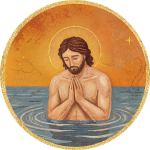
We believe Jesus became the Son of Man at His baptism by John the Baptist. The virgin birth narrative—absent from the earliest Gospel (Mark) and rejected by the Nazarenes and Ebionites—arose at least forty years after Jesus’ death as a mythological embellishment based on a misreading of Isaiah 7:14.
Early church fathers such as Epiphanius explicitly record that the Nazarenes rejected the first two chapters of Matthew, which contain the later nativity additions.
Baptism
Nazarenes practice water immersion—preferably in a river—at least once each year, typically near the New Year. It symbolizes repentance, renewal, and the cleansing of one’s life.
The Nazarene Eucharist
We follow the Eucharistic practices outlined in the Didache, the earliest known Nazarene instruction manual.
Our Eucharist is simple: bread and wine offered in thanksgiving.
We do not embrace later Hellenistic interpretations of the elements as literal body and blood.
Leadership After Jesus: James the Just
After Jesus, the rightful leader of the movement was His brother, James the Just. We acknowledge the Three Pillars of the Jerusalem Church described in the New Testament—James, Peter, and John—and affirm the spiritual lineage entrusted to James.
While we reject the teachings of Paul and view him as an apostate, we still extend to him compassion and love, as Jesus taught. Paul was mistakenly called the “ringleader of the Nazarenes” in Acts due to his charismatic preaching to Gentiles—not because he represented the original Way.
Torah Observance
Nazarenes follow the Torah and honor the commandments God gave Israel. We observe the Sabbath from Friday evening to Saturday evening, the biblical festivals Jesus observed, and the commandments Yeshua affirmed in His teaching.
We take seriously Jesus’ own words:
“I have not come to abolish the Law or the Prophets but to fulfill them.” (Matt. 5:17)
The Two Greatest Commandments
As Jesus taught, the entire Law rests on two commandments:
1) Love the Lord your God with all your heart, soul, and mind.
2) Love your neighbor as yourself.
These commandments define the heart of Nazarene spirituality.
The Resurrection
Here is the account of the resurrection from the Gospel of the Hebrews (a text used by the Nazarenes). This account is from Jerome (De Viris Illustribus, 2):
“The Lord, after he had given the linen cloth to the servant of the priest, went to James [the brother of Jesus] and appeared to him. For James had sworn that he would not eat bread from that hour in which he drank the cup of the Lord until he should see him risen from among those who sleep. And shortly thereafter the Lord said: ‘Bring a table and bread!’ And he took bread and blessed it and broke it and gave it to James the Just and said to him: ‘My brother, eat your bread, for the Son of Man has risen from those who sleep.’”
What is interesting in this account is that Jesus first appears to James the Just (thereby indicating he is to continue the Nazarene movement in his stead). Notice that there is no declaration to baptize all nations or proclaim the resurrection to the world in order to gain salvation.
Just as modern scholarship increasingly acknowledges, the early Nazarenes and their later cognate group, the Ebionites, affirmed the resurrection of Jesus—but not in the manner promulgated by Paul of Tarsus.
For Paul, the resurrection is inseparable from a blood-atonement sacrificial economy: Christ dies as expiatory offering, is raised as proof of the efficacy of his sacrificial blood, and thus inaugurates a salvation system pivoting upon substitutionary death.
The Nazarenes held no such view.
For them, the resurrection functioned not as the ratification of a blood-sacrifice ledger, but as the vindication of the Son of Man, the Messiah anointed by God, who came to restore the original revelation given to Israel. The God whom Jesus embodied was not a deity who demanded blood to be appeased, but a God of covenantal fidelity, compassion, and moral restoration. In the Nazarene understanding, the resurrection is the divine proclamation that Jesus’ message—Torah faithfulness, justice, and mercy—was true, and that he, not Rome nor the Temple aristocracy, was God’s chosen agent.
How One Gains Salvation (Eternal Life)
The doctrine of resurrection and salvation has been narrowly defined in much of later Christianity because the tradition came to rest upon Paul’s formulation of belief. Paul teaches: “If you confess with your lips that Jesus is Lord and believe in your heart that God raised him from the dead, you will be saved” (Romans 10:9–10). In this model, eternal life is contingent upon verbal confession and belief in the resurrection event as the saving act.
The Nazarene Way, however, does not follow Paul. We follow the teachings of Jesus the Nazarene himself. Jesus never instructed anyone to attain salvation by professing belief in his divinity, nor by proclaiming his death and resurrection as a cosmic blood-atonement. Rather, Jesus grounded salvation entirely in doing the will of the Father and embodying righteousness, mercy, and compassion.
“Not everyone who says to me, ‘Lord, Lord,’ will enter the kingdom of heaven,
but only the one who does the will of my Father in heaven.”
— Matthew 7:21 (NRSV)
When asked how to receive eternal life, Jesus did not tell the seeker to profess belief in his death; he said plainly:
“If you wish to enter into life, keep the commandments.”
— Matthew 19:17 (NRSV)
And in his final judgment teaching, Jesus makes the criterion unmistakable. Salvation is granted not through creed, but through enacted love:
“I was hungry and you gave me food… I was a stranger and you welcomed me…
Truly I tell you, just as you did it to one of the least of these my brothers and sisters,
you did it to me.”
— Matthew 25:35–40 (NRSV)
Thus, for the original followers of Jesus—the Nazarenes—salvation rests not upon doctrinal confession, but upon living faith in action: obedience to God, works of mercy, righteousness, and love.
Beliefs Concerning the Trinity
Nazarenes do not hold to the doctrine of the Trinity as it was later formulated by Tertullian. We believe this teaching emerged through later theological development and was not part of the earliest message taught by Jesus.
Living as Jesus Lived
Nazarenes strive to walk as Jesus walked. Our goal is to recover and live the authentic faith of Jesus the Nazarene, while distinguishing it from later institutional forms of Christianity.

Email:
Phone:
+1 (949) 534-8763
Address:
30021 Tomas St
Suite 300
Rancho Santa Margarita, CA 92688
Follow


© Nazarene Way Church 2026
Nazarene Way Church has been granted tax-exempt status as a church under Section 501(c)(3) of the Internal Revenue Code.
501(c)3: 33-2143610